
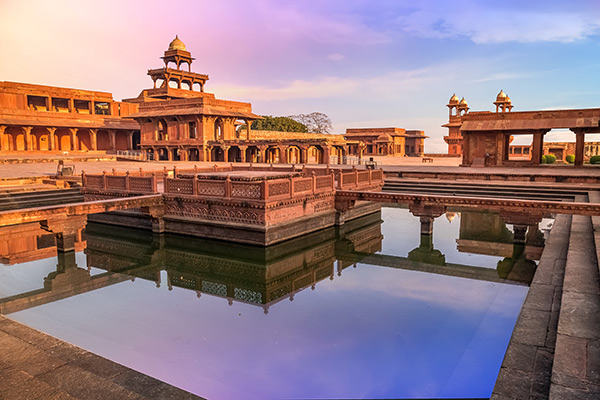
Fatehpur Sikri: The Forgotten City of Mughal Grandeur
Just 40 km west of Agra lies a city that once shimmered with imperial ambition and architectural brilliance — Fatehpur Sikri. Built by the legendary Mughal Emperor Akbar, this abandoned city is one of India’s most atmospheric and enigmatic historical sites.
Today, it stands frozen in time — a stunning blend of Persian, Indian, and Islamic architecture, echoing the glories of an empire that ruled with both might and mind.
🏛️ A Dream Carved in Red Sandstone
Fatehpur Sikri was founded in 1571 by Akbar the Great, who shifted his capital from Agra to this site to honor the Sufi saint Sheikh Salim Chishti, who had foretold the birth of Akbar’s heir.
Built almost entirely in red sandstone, the city was meticulously planned and constructed as a symbol of Akbar’s vision of a grand, inclusive empire. However, despite its grandeur, Fatehpur Sikri served as the capital for only 14 years before being abandoned — likely due to water shortages and strategic reasons.
🕌 Architectural Marvels of Fatehpur Sikri
This UNESCO World Heritage Site is a masterpiece of Mughal architecture, blending diverse cultural influences from Hindu, Persian, and Central Asian traditions.
Here are some must-see landmarks within Fatehpur Sikri:
1. Buland Darwaza – The Gate of Magnificence
-
The highest gateway in the world, at 54 meters tall
-
Built to commemorate Akbar’s victory over Gujarat in 1573
-
An imposing structure of red sandstone and white marble inlays, inscribed with Persian calligraphy
2. Jama Masjid – The Grand Mosque
-
One of the largest mosques of the Mughal era
-
Still functions as a place of worship today
-
Features exquisite geometric patterns and floral motifs
3. Tomb of Sheikh Salim Chishti
-
A white marble marvel standing out among red sandstone
-
Pilgrims still come here to tie threads on its marble screens (jali work), seeking blessings for children and good fortune
4. Diwan-i-Aam (Hall of Public Audience)
-
Where Akbar met with the general public and resolved matters of state
-
Built with elegant arches and platforms, reflecting Akbar’s accessibility as a ruler
5. Diwan-i-Khas (Hall of Private Audience)
-
Known for its central lotus-shaped pillar, with 36 brackets symbolizing religious harmony
-
Served as a space for important discussions with advisors and foreign dignitaries
6. Panch Mahal – The Five-Storey Palace
-
A pyramidal structure offering panoramic views
-
Believed to be used for entertainment and relaxation, especially for the royal women
7. Jodha Bai’s Palace
-
A blend of Hindu and Mughal architecture
-
The largest residence in the complex, known for its intricately carved balconies and brackets
📍 How to Reach Fatehpur Sikri
-
Distance from Agra: ~40 km (1 hour by car)
-
By Road: Well-connected via the Agra–Jaipur Highway (NH21)
-
By Train: Fatehpur Sikri Railway Station (limited connectivity)
-
By Bus/Taxi: Regular buses and private cabs available from Agra
🕰️ Timings and Entry
-
Opening Hours: Sunrise to sunset (typically 6:00 AM to 6:30 PM)
-
Closed: Open all days, but the mosque remains closed during prayer hours for non-Muslims
-
Entry Fees:
-
₹35 for Indian citizens
-
₹550 for foreign nationals
-
₹40 additional for Buland Darwaza
-
Children under 15: Free
-
🎟️ Tip: Use the ASI Monument Pass or combined Agra ticket if you’re visiting multiple heritage sites.
📸 Best Time to Visit
-
October to March: Pleasant weather makes exploration comfortable
-
Early morning: Fewer crowds and golden lighting for photography
-
Evening: Enjoy a walk through the ruins with the soft hue of sunset
🌍 A Symbol of Akbar’s Secularism
Fatehpur Sikri isn’t just a monument—it’s a symbol of Akbar’s vision for a diverse and united India. His court was known for including Hindus, Muslims, Christians, Jains, and Zoroastrians. In fact, Akbar even initiated a new religion — Din-i-Ilahi — promoting tolerance and synthesis of different faiths, and Fatehpur Sikri was its ideological birthplace.
💬 Final Thoughts
Wandering through the echoing courtyards and empty palaces of Fatehpur Sikri feels like stepping into a living museum. Every wall and pillar here tells a story — of ambition, faith, innovation, and ultimately, the impermanence of power.
If you’re visiting Agra, take the time to journey beyond the Taj and discover this abandoned city of dreams. Fatehpur Sikri may no longer be a living capital, but it remains one of the greatest architectural legacies of the Mughal Empire.