
Qutub Minar : Delhi’s Tower of Triumph and History
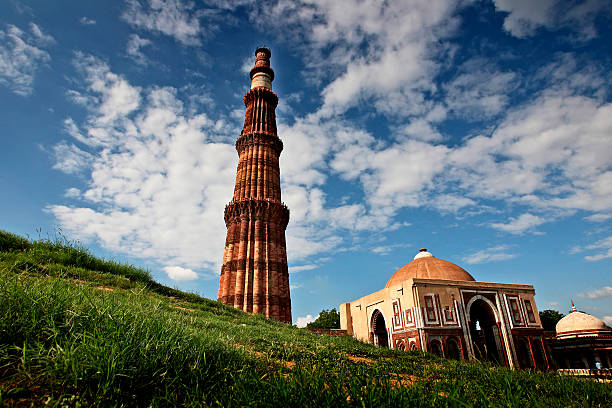
Rising majestically in the bustling city of Delhi, the Qutub Minar is a towering symbol of India’s medieval history, architectural brilliance, and cultural synthesis. As one of the tallest brick minarets in the world, it stands not only as an architectural marvel but also as a testament to the rich tapestry of India’s past.
📜 A Glimpse into History
The story of Qutub Minar begins in 1192 AD when Qutb-ud-din Aibak, the founder of the Delhi Sultanate, commissioned this towering structure to celebrate his victory over the last Hindu kingdom in Delhi. Over the years, his successors, particularly Iltutmish and Firoz Shah Tughlaq, added to and restored the minar, making it the magnificent monument it is today.
🏗️ Architectural Marvel
Standing tall at 72.5 meters (238 feet), the Qutub Minar is a five-storeyed tower, each level marked by a projecting balcony. The minaret tapers as it rises, with a base diameter of 14.3 meters narrowing to 2.7 meters at the top.
Made primarily of red sandstone with accents of white marble on the upper levels, the minar is adorned with intricate Islamic calligraphy, floral motifs, and geometric patterns, showcasing the Indo-Islamic architectural style that blends Persian, Turkic, and Indian influences.
🕌 The Qutub Complex
The Qutub Minar is part of a larger UNESCO World Heritage Site—the Qutub Complex—which includes several other historically significant structures:
-
Quwwat-ul-Islam Mosque: The first mosque built in Delhi, constructed using materials from demolished Hindu and Jain temples, making it a symbol of the cultural transformations during the Sultanate period.
-
Iron Pillar of Delhi: Famous for its rust-resistant composition, this ancient pillar dates back to the 4th century and stands as a marvel of metallurgy.
-
Alai Darwaza: A grand gateway built by Alauddin Khilji, showcasing exquisite Islamic architecture with intricate carvings and use of white marble and red sandstone.
-
Tombs of Iltutmish and Alauddin Khilji: Important funerary monuments within the complex reflecting the architectural evolution of the period.
🌟 Why Visit Qutub Minar?
-
Architectural Wonder: Its height, intricate carvings, and historical significance make it a must-see for architecture buffs and history enthusiasts alike.
-
Cultural Symbol: The minar represents the beginning of Muslim rule in India, making it a key historical landmark in the subcontinent’s story.
-
UNESCO Heritage Site: Recognized globally for its cultural importance and outstanding preservation.
🕰️ Visiting Details
-
Location: Mehrauli, New Delhi
-
Opening Hours: Sunrise to sunset (approximately 7:00 AM – 5:00 PM)
-
Entry Fee: ₹40 for Indian citizens, ₹550 for foreign nationals
-
Best Time to Visit: October to March for pleasant weather
📸 Capture the Moment
From the intricate calligraphy on the minar’s balconies to the sprawling complex with its ancient pillars and ruins, every corner of the Qutub Complex tells a story worth capturing. Early morning or late afternoon light offers the best natural lighting for photography.
🌿 Final Thoughts
The Qutub Minar is not just a monument; it’s a chronicle of conquest, culture, and architectural innovation. Standing under its shadow, one can truly feel the pulse of history and the legacy of the many civilizations that have shaped modern India.
If you find yourself in Delhi, make sure to explore this tower of triumph—a proud symbol of India’s rich and diverse heritage.