
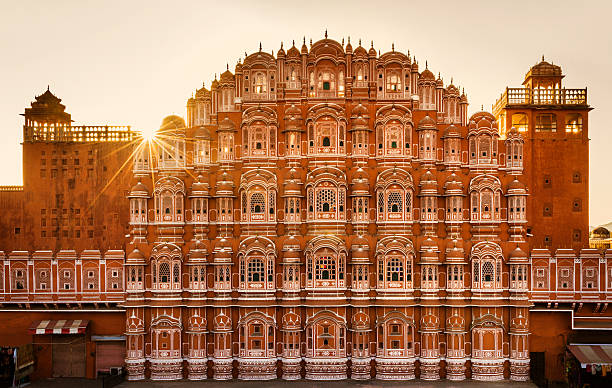
Hawa Mahal, Jaipur – The Palace Where the Wind Still Whispers
In the heart of Jaipur’s bustling old city, rising like a pink honeycomb against the sky, stands the iconic Hawa Mahal — the “Palace of Winds”. More than just a stunning facade, this five-story architectural wonder is a silent storyteller of Jaipur’s royal past, echoing tales of culture, creativity, and the cleverness of design.
🏰 A Brief History of Hawa Mahal
Built in 1799 by Maharaja Sawai Pratap Singh, Hawa Mahal was designed by Lal Chand Ustad, and it reflects the fusion of Rajput and Mughal architectural styles. Its primary purpose? To allow royal women — who followed the strict purdah system — to observe street life and processions from behind the intricate jharokhas (windows) without being seen.
With 953 small windows (yes, you read that right!), the Hawa Mahal isn’t just a palace — it’s a living piece of engineering genius and cultural symbolism.
🌸 Why Hawa Mahal is So Unique
-
Ventilation Wonder: The name Hawa Mahal literally means “Palace of Winds”. The clever design ensures a continuous cool breeze flows through the palace, even in the scorching Rajasthani summer.
-
Architectural Delight: The facade resembles the crown of Lord Krishna and is made of red and pink sandstone, which glows in the early morning light — making it a favorite among photographers and Instagrammers.
-
Hidden from the World: The interior chambers are relatively small and simple, with narrow passages connecting them — designed more for viewing than living.
📍 What to Expect During Your Visit
Unlike many palaces in Rajasthan that boast grand halls and sprawling courtyards, Hawa Mahal is all about the facade. But don’t be mistaken — walking inside gives you a whole new perspective:
🌀 Climb the Palace
There are no stairs — only ramps! As you climb up each level, the view of the Jaipur city streets grows wider and more captivating.
📸 Best Views
From the top, you’ll get panoramic views of Jantar Mantar, City Palace, and the bustling Johari Bazaar below. It’s a great spot for photographers looking to capture the contrast between old-world charm and city chaos.
🏛️ The Museum
There’s a small museum on the premises showcasing artifacts, miniature paintings, and historical displays — worth a quick stop.
🕒 Visitor Information
-
Timings: 9:00 AM – 5:00 PM (Open all days)
-
Entry Fee: ₹50 (Indians), ₹200 (Foreigners)
-
Best Time to Visit: Early morning for soft lighting and fewer crowds
-
Location: Badi Chaupar, Jaipur (Easily accessible by tuk-tuk or cab)
💡 Travel Tips
-
Don’t just admire the facade from the front — go inside for the full experience!
-
Combine your visit with nearby attractions like City Palace, Jantar Mantar, and Johari Bazaar.
-
For the best photo ops, visit early in the morning when the rising sun lights up the sandstone.
-
Bring water — though compact, the palace can get warm, especially on the higher floors.
📝 Final Thoughts
Hawa Mahal isn’t just another palace — it’s poetry in stone. A symbol of Jaipur’s architectural brilliance, it quietly stands at the intersection of history and daily life. As I stood there watching the chaos of the city below from behind a delicate screen window, I couldn’t help but think about the royal women who once watched from the same spot, hidden but connected to the world.
If you’re in Jaipur, Hawa Mahal is a non-negotiable stop. It may not have grand halls, but it will leave you breathless — quite literally, if you climb all the way up!
Have you visited Hawa Mahal? Drop your thoughts or travel tips in the comments!
Planning your Jaipur trip? Stay tuned for my upcoming blog on the top 10 places to visit in the Pink City.